






Meta automates Data Centers: ABB and Kinova Robots replace humans
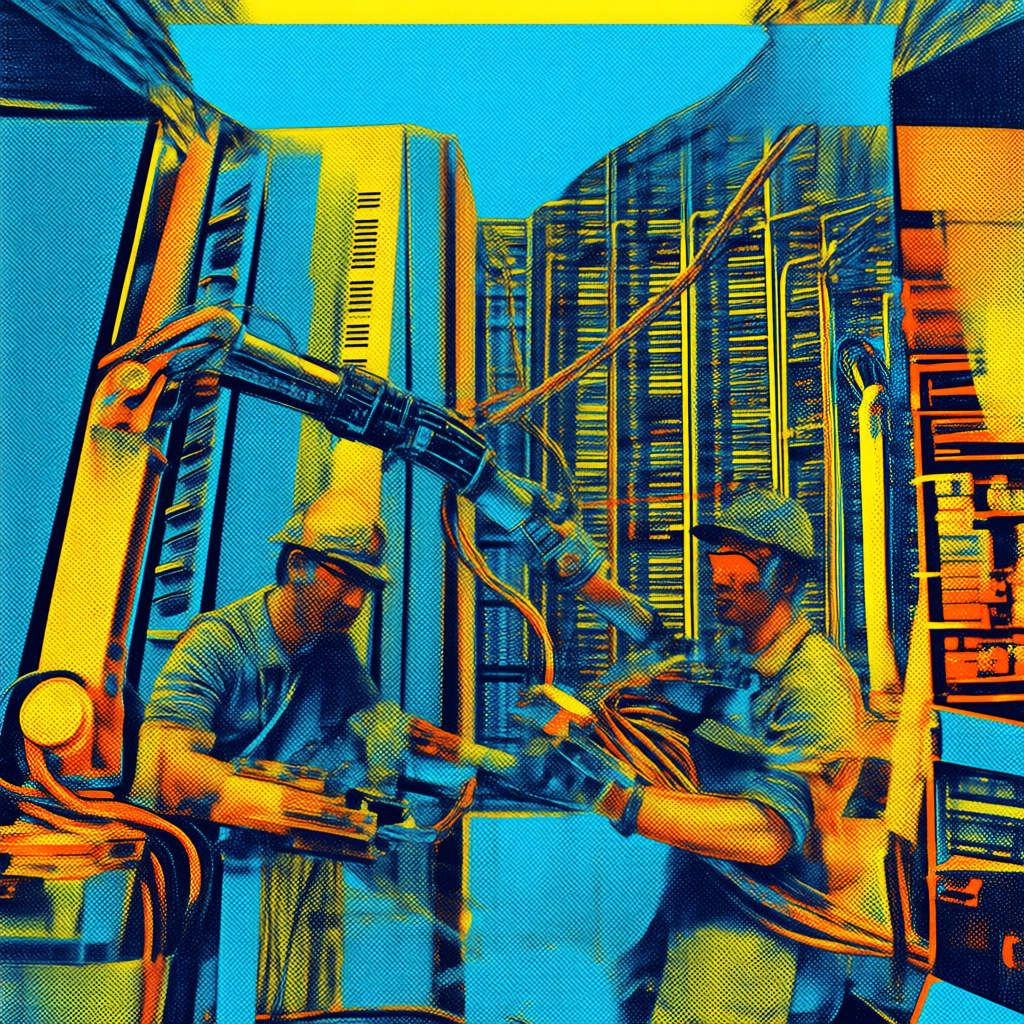
- Meta is testing robots from Watney Robotics, Kinova and ABB to automate cable swaps, server resets and power cycling.
- The tests, conducted between Iowa and Ohio, could replace up to 80% of the workload of some specialized technicians.
- The initiative aims to reduce operational costs and accelerate incident response as Meta's AI infrastructure scales rapidly.
- The multi-vendor strategy indicates a data center robotics market that is still fragmented and in the definition phase.
Meta's offensive: the physical automation of Data Centers
Meta has launched a series of quiet but ambitious tests to integrate advanced robotics within its data centers. The goal is to delegate hardware maintenance tasks to machines, which until now have been the exclusive prerogative of human technicians. According to several sources, including Aichatdaily and Wired, the company is implementing robotic solutions to perform three critical operations: network cable swapping, server rebooting (power cycling) and hardware repositioning (part reseats).
The numbers regarding the potential impact are significant. Current and former employees report that, if the trials are successful, a single robot dedicated to network cable swapping could replace up to 80% of the workload of some technicians. This transition is not just a technological experiment, but a strategic necessity to manage the massive expansion of the infrastructural footprint required to support Artificial Intelligence models.
Technical details and geographic deployment
The implementation is not uniform, but distributed across different sites and types of hardware:
- Altoona, Iowa: In Meta's largest campus (opened in 2014), dual-arm robots from Watney Robotics have been operational since June 2025.
- New Albany, Ohio: At the Prometheus site, scissor-lift robots from ABB are being tested.
- Targeted solutions: Meta is evaluating the Kinova Gen3 robotic arm specifically for power cycling (cutting power to servers on command).
- Simplified systems: In some facilities, rudimentary devices have been installed, described as finger-shaped arms or 'pointy sticks', capable of physically pressing the power button of hardware such as Mac Minis via remote human command.
Strategic context: why automation now?
The acceleration toward robotics in data centers is not accidental, but stems from the convergence of three key factors. Context analysis: the explosion in AI infrastructure spending has made the linear growth of technical personnel unsustainable. Meta must scale computational capacity without labor costs becoming an operational bottleneck.
Technological convergence
According to analysis by Endroid, the inflection is due to:
- Reduction in hardware costs: Prices of robotic components are compressed, making the initial investment more sustainable.
- Maturity of AI models: In the last 18-24 months, progress in vision systems and language models has drastically improved the dexterity and tactile feedback of robots. This allows for the management of variances in tasks without having to manually reprogram every single action.
- Reliability: While early industry trials were characterized by gross errors (such as robots crushing servers), new generations of machines are capable of performing precision tasks at scale.
Comparing positions: Management vs Workers
The project has created a clear divergence of narratives between Meta's management and the operational workforce.
The corporate vision
Eric Xu, senior manager for robotics at Meta, stated in a conference last year that the long-term goal is the introduction of robots to accelerate incident response, monitor environments and manage preventive maintenance. From the official communication standpoint, spokesperson Francis Brennan denied that the goal is staff cuts, arguing that the United States faces a shortage of skilled infrastructure workers and that Meta is investing heavily in hiring and training.
The technicians' fear
The perceived reality inside the data centers is different. One technician told Theaicronicle:
'We thought those of us performing physical tasks were safe for a while, but not anymore'. The main concern regards job security, as the automation of repetitive tasks eliminates the 'physical security' barrier that technicians believed was insurmountable for AI.
Impact on the market and the supplier ecosystem
Meta's strategy reveals much about the current state of the industrial robotics market applied to IT. The company did not choose a single partner, but opted for a multi-vendor approach:
- Kinova: Collaborative arms.
- ABB: Heavy industrial automation.
- Watney Robotics: Specialized robots for data centers.
Strategic analysis: This fragmentation suggests that there is not yet a dominant 'platform player' in the data center robotic maintenance sector. For Meta, diversifying suppliers means avoiding dependence on a single vendor (vendor lock-in) and maintaining higher bargaining power, despite the increase in system integration complexity.
Implications for the entrepreneur and business
For an entrepreneur, the Meta case is not just industry news, but an indicator of a paradigm shift in the economics of infrastructure. Here are the key points to monitor:
1. Operating Leverage and Margins
Automation transforms variable costs (specialized labor, 24/7 shifts, recruiting costs in saturated markets) into depreciable fixed costs (robotic hardware). This allows for almost infinite scalability of operational capacity without a proportional increase in payroll.
2. Redefinition of Skills
Value shifts from physical execution (connecting a cable) to remote supervision and maintenance of robotic systems. Companies managing infrastructure will need to rethink personnel training plans, moving from 'field technicians' to 'robotic fleet operators'.
3. New Infrastructural Frontiers
As reported by Theaicronicle, eliminating the human need inside server rooms paves the way for data centers in hostile environments. If human intervention is no longer required for a server reset, it becomes technically and economically feasible to move infrastructure to places where humans cannot reach, such as underwater or space data centers, optimizing cooling and energy costs.
Future scenarios and technical limits
Despite the optimism, total automation is not imminent. Significant technical limits still exist that Meta must overcome. Currently, robotic systems show difficulties with grayscale vision and in managing extremely complex or messy cabling, which requires a spatial problem-solving ability that is still predominantly human.
Possible short-to-medium term evolutions:
- Hybridization: A model where the human guides the robot remotely (as already happens with 'pointy sticks'), combining human decision-making intelligence with the physical presence of the machine.
- Hardware Standardization: To facilitate robotics, Meta and other hyperscalers could push for even more rigid server and rack construction standards, eliminating any variability that could confuse robotic sensors.
- Model Expansion: If the tests in Iowa and Ohio yield the hoped-for results, we will see a systematic replication across all of Meta's global nodes, creating a precedent for Amazon (AWS) and Google.
FAQ
Which companies provide the robots to Meta?
Meta uses hardware from Watney Robotics (dual-arm robots), Kinova (Gen3 arms for power cycling) and ABB (scissor-lift robots).
What percentage of work could the robots replace?
According to estimates from some technicians, robots for network cable swapping could replace up to 80% of the workload of certain technical roles.
In which locations are the tests active?
The trials are ongoing primarily at the Altoona, Iowa campus and the Prometheus site in New Albany, Ohio.
What is Meta's official position on the layoff of technicians?
Meta, through spokesperson Francis Brennan, has stated that the company is investing in hiring and training, arguing that there is a shortage of skilled infrastructure workers in the USA.
Sources: Aichatdaily, Gate, Endroid, Wired, Theaicronicle · dossier by glacom's AI newsroom

.png)


